Base layer
Cooked grains, roasted root vegetables, or prepared legumes that serve as the foundation of multiple dishes.
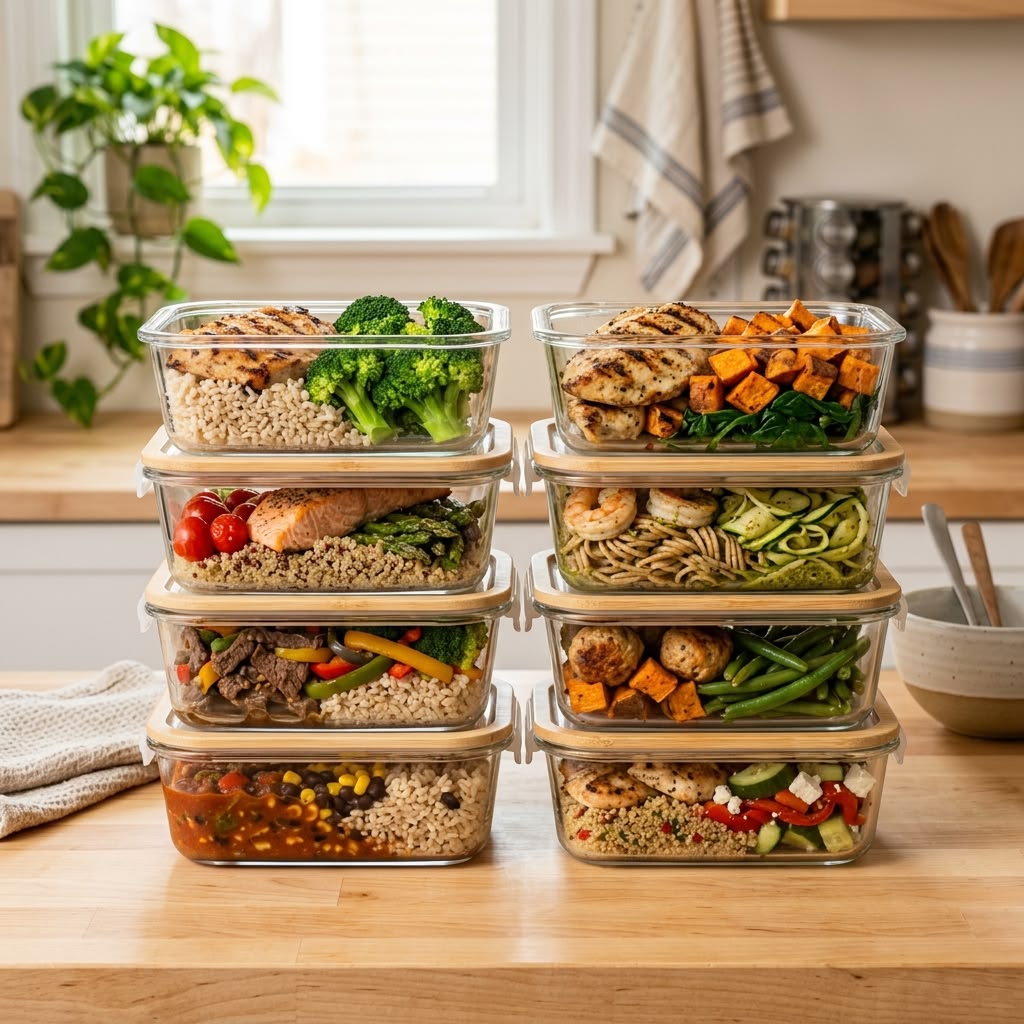
Instead of following rigid daily recipes, build a library of interchangeable components. Mix grains, proteins, and accompaniments across the week without starting from zero each evening. All examples below are for educational illustration — not personalised advice.
Discuss your module setImportant notice: Meal modules on this page describe organisational templates only. They are not medical meal plans, allergen-verified menus, or calorie-controlled programmes. Ingredient choices should reflect your own preferences and any guidance from qualified professionals.
Each module belongs to a category. During anchor-day prep, you prepare one or two items from each layer. Weeknight assembly takes minutes.
Cooked grains, roasted root vegetables, or prepared legumes that serve as the foundation of multiple dishes.
Baked fish, pan-seared tofu, shredded chicken, or hard-boiled eggs — prepared in batches and stored separately.
Sauces, dressings, pickled elements, and fresh herbs that transform the same base into distinct flavour profiles.
Quinoa base, roasted chickpeas, tahini-lemon dressing, cucumber and tomato. Suitable for lunch or dinner assembly.
Boiled potatoes, baked salmon, dill-yogurt sauce, steamed greens. Components store well for three to four days refrigerated.
Jasmine rice, marinated tofu, ginger-garlic sauce, quick-pickled vegetables. Final assembly requires one pan and five minutes.
These templates are fictional examples for educational purposes. They are not personalised recommendations. Portion sizes, ingredients, and suitability vary by individual. Consult a diëtist or physician for nutrition-related questions.
A rotation prevents both boredom and over-reliance on a single dish. We structure cycles so anchor-day effort stays constant while visible variety increases.
Prepare two grain options and one universal sauce. Focus on building the component library.
Introduce two protein modules that pair with existing bases. Reuse sauces from week one.
Develop two new accent layers. Combine with any prior base and protein for fresh combinations.
Identify modules you actually used. Remove unused components and document your personal rotation.
Group ingredients by store section — produce, refrigerated, dry goods — rather than by recipe. One pass through the shop covers the entire week.
Calculate amounts based on portion count multiplied by planned reuse days. Cooking double on anchor day costs marginally more time but eliminates three subsequent prep sessions.
Each module includes one alternative ingredient. If salmon is unavailable, the Nordic plate accepts trout or white fish without restructuring the shopping list. This resilience keeps your system running when stores or seasons shift.
Consulting sessions help identify templates suited to your schedule. Fees are quoted in writing before booking. Initial inquiries via our contact form are free.
Start a conversation